Musical Instruments
There are always choices
Sometimes there will be talking, sometimes listening to music, and sometimes playing. A client will always be encouraged but never forced to actively participate. For some clients a more receptive approach is equally beneficial. At all times the Music Therapist will draw from their ‘toolbox’ of musical elements that includes pulse, rhythm, melody, harmony, timbre, structure.
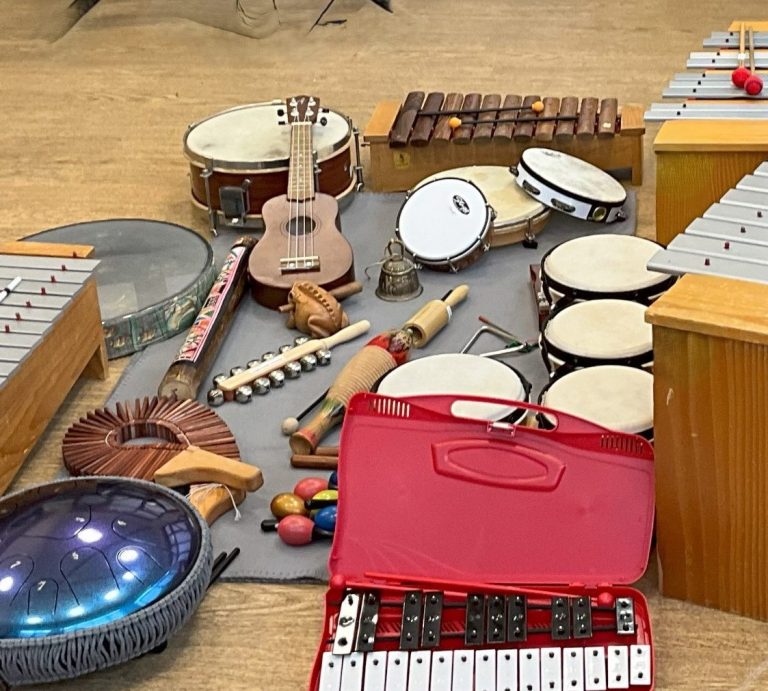
A musical instrument can become anything you want
Sound, Music, Communication
A wide range of instruments provides opportunities for rich multisensory experiences (auditory, visual, tactile etc)
Sounds to communicate with each other
We can communicate moods, feelings and emotions using instruments. This is called 'Improvisation'.
Instruments as a tool for song-writing
Using a piano, guitar or other harmonic instrument can take on a more functional use to facilitate song-writing which is a combination of verbal and non-verbal to expression.
Improvising with sounds to explore and connect with oneself and/or, other
Through improvisation the client may find themselves drawn to certain rhythms, melodies and patterns which they connect with not only in an auditory way but physically too. For example, the very act of striking a xylophone with a beater may create a 'satisfying' sensation.